Best Luxury Travel for Families: Definitive High-End Guide
Structuring elite international journeys for multi-generational households requires moving past standard resort brochures to examine the systemic mechanics of temporal synchronization, child-compatible spatial architecture, and frictionless execution. As affluent families transition away from chaotic itineraries toward intentional, slow-paced exploration, high-end family leisure has transformed into an exercise in absolute operational precision and deep relational enrichment. This paradigm shift demands an analytical approach that measures a journey not by visible opulence, but by its capacity to insulate multiple generations from friction while providing shared cultural and physical resonance.
Navigating this specialized sector introduces complex operational realities extending far beyond baseline room rates, private charters, or kids’ club amenities. A multi-jurisdictional private itinerary traversing remote marine archipelagos, sovereign alpine sanctuaries, or protected wildlife concessions offers extraordinary access, yet exposes travelers to unpredictable microclimates, regulatory hurdles, and extreme remote logistics. Evaluating these competing models requires balancing diverse age demographics, privacy thresholds, and time constraints against exact asset classes and operational contingencies.
This analysis establishes an exhaustive reference blueprint for understanding, classifying, and selecting elite itineraries. By investigating historical shifts, structural risk frameworks, financial resource allocation, and regional deployment dynamics, this inquiry equips discerning decision-makers with the technical criteria needed to evaluate high-end travel investments with absolute clarity.
Understanding “best luxury travel for families.”

Evaluating what constitutes the best luxury travel for families requires examining the intersection between multi-generational spatial architecture, flexible programming, and invisible operational support. The category encompasses private island buyouts, fully crewed motor yachts, exclusive-use wilderness safari concessions, and residential resort villas equipped with dedicated butler and nanny services. A common misinterpretation assumes that family luxury is defined strictly by physical materialism—such as sprawling water parks or gold-plated children’s amenities—ignoring how true high-end family mobility is anchored in seamless pacing, individualized child engagement, and absolute acoustic separation between adult and junior living zones.
Oversimplifying these operational realities exposes family units to acute friction, including rigid resort dining schedules that clash with infant sleep cycles, unvetted third-party childcare providers, or architectural layouts that compromise safety near deep water or cliffs. Comprehensive evaluation requires cross-referencing staff-to-guest ratios, private vehicle exclusivity, and emergency medical response protocols to ensure the selected environment matches the exact safety tolerances and developmental stages of the household.
True comprehension of this domain necessitates analyzing how distinct geographical corridors shape daily transit rhythms and exposure levels. Evaluating a private beach villa in the Caribbean highlights marine accessibility and predictable weather, whereas analyzing a private game reserve buyout in South Africa emphasizes malaria-free zones, specialized children’s ranger programs, and complex bush airstrip logistics. When family leaders investigate elite alternatives, they require an analytical framework weighing environmental context against operational redundancy.
Deep Contextual Background
The historical evolution of high-end family mobility reflects a profound structural transformation from rigid, adult-centric luxury hotels toward hyper-personalized, multi-generational compounds. Throughout the mid-twentieth century, elite travel segregated families into formal dining rooms and strict supervision windows, treating children as operational disruptions rather than primary stakeholders in the journey.
A structural transformation occurred as global wealth generation shifted toward younger demographics and multi-generational households pooled assets for shared experiences, creating a demand for properties designed specifically to accommodate toddlers, teenagers, and grandparents simultaneously. Hospitality innovators responded by developing expansive residential villas, private estates with independent wings, and immersive educational conservation programs that engage young minds without sacrificing adult refinement. Concurrently, specialized destination management companies emerged to engineer closed-loop family access, securing private marine biologists, customized wildlife tracking guides, and interactive culinary workshops.
In the contemporary era, navigating this landscape requires strict analytical review of property safety certifications, private transfer liabilities, and an understanding of how seasonal shifts alter destination dynamics for families. Understanding how high-end family travel evolved into a sophisticated institutional sector reveals why meticulous asset selection and expert orchestration are essential for successful household journeys.
Conceptual Frameworks and Mental Models
Navigating and selecting optimal high-end family itineraries requires rigorous mental models that synthesize energy management, spatial zoning, and operational redundancy.
1. The Multi-Generational Energy Matrix
This framework evaluates the daily stamina curves of different age groups—from toddlers to grandparents—and structures itineraries to prevent over-scheduling while ensuring active engagement.
2. The Spatial Zoning Gradient
This mental model maps how physical accommodations provide acoustic and visual separation, ensuring that adults retain quiet spaces for rest while children enjoy dedicated play zones.
3. The Operational Redundancy Equation
This operational model calculates the ratio of backup assets (such as secondary nannies, medical standby support, and alternative weather itineraries) relative to the remoteness of the destination, ensuring absolute safety and stress-free execution.
Key Categories or Variations of Luxury Family Escapes
Categorizing the vast landscape of elite family journeys requires grouping options by their environment, structural format, and experiential focus. Travel coordinators evaluate these categories based on family age demographics, privacy needs, and educational goals.
-
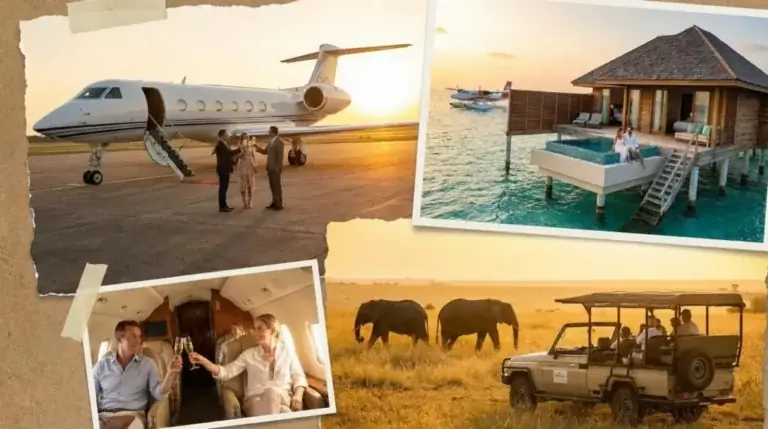
Private Island Resort Buyouts: Fully sequestered island estates in the South Pacific or Caribbean featuring private marine biologists, customized water sports, and zero public interaction. Trade-off: Ultimate psychological decompression and pristine natural settings balanced by long-range seaplane or helicopter transfer logistics.
-
Exclusive-Use Safari Concessions: Private game reserves in malaria-free South African or East African regions offering private traversing rights and dedicated child-friendly ranger teams. Trade-off: Unrivaled wildlife immersion and flexible daily schedules balanced by remote airstrip limitations.
-
Fully Crewed Motor Yacht Charters: Custom marine vessels operating in Mediterranean or Caribbean waters with dedicated crews, private chefs, and water toy arsenals. Trade-off: Total maritime freedom and customized culinary provisioning balanced by maritime weather sensitivity and confined stateroom footprints.
-
Alpine Chalet Estates: Serviced luxury chalets in Courchevel, Aspen, or Zermatt featuring private ski instructors, in-house spa facilities, and dedicated chalet hosts. Trade-off: Exceptional winter sports access and cozy family bonding balanced by cold-weather packing complexity and high altitude adjustments.
-
Residential Resort Villas: Branded residential properties within ultra-luxury resort ecosystems (such as Four Seasons or Rosewood) providing multi-bedroom layouts alongside full access to resort amenities. Trade-off: Balanced access to kids’ clubs and private residential seclusion balanced by shared resort common areas.
-
Cultural Heritage Estate Rentals: Historic converted villas in Tuscany, Provence, or the Cotswolds featuring private pools, expansive gardens, and private cooking tutors. Trade-off: Slow-paced historical immersion and culinary education balanced by rural driving distances and variable air conditioning standards.
Comparison of Luxury Family Vacation Categories
| Vacation Category | Typical Setting | Primary Operational Advantage | Notable Limitation or Constraint |
| Private Island Buyouts | Tropical marine lagoons | Complete household privacy; custom marine programs | Complex multi-leg transfer logistics |
| Exclusive Safari Lodges | Malaria-free bushveld | Dedicated kids’ rangers; private game vehicles | Remote airstrip logistical dependencies |
| Crewed Superyachts | Coastal & island waters | Floating private villa; dynamic itinerary changes | Weather-dependent routing; cabin space limits |
| Branded Resort Villas | Global prime destinations | Access to kids’ clubs; multi-bedroom space | Shared public resort common areas |
Realistic Decision Logic
When family units evaluate potential luxury categories, selection must be anchored in the ages of the children and the physical capabilities of the grandparents. If a household includes toddlers and infants, a branded resort villa with professional nursery support and shallow, controlled pools provides the necessary safety and medical access. Conversely, if the family comprises teenagers and active adults, an exclusive-use safari concession or a crewed motor yacht delivers the required physical adventure, dynamic pacing, and shared exploratory thrills.
Detailed Real-World Scenarios and Operational Dynamics
To understand how elite family journeys perform under real-world operational conditions, consider four distinct scenarios.
Scenario A: Multigenerational Flight Disruption and Tarmac Coordination
A multi-generational family travels from Los Angeles to a private resort in Fiji using a chartered aircraft connecting to a local resort transfer.
-
Failure Mode: A medical delay or passport issue for a family member delays the initial departure, threatening to break downstream helicopter and boat transfer windows.
-
Second-Order Effect: The family’s private aviation broker and resort host coordinate in real-time, holding the private island transfer boat and adjusting the resort’s private chef schedule without incurring penalty fees or causing family stress.
Scenario B: Dietary and Medical Customization in Remote Safari Camps
A family with severe pediatric food allergies and an infant requiring specialized formula books a remote safari lodge in Botswana.
-
Failure Mode: Standard bush-camp provisioning lacks specialized allergen-free ingredients or infant supplies, risking health complications in the field.
-
Second-Order Effect: The lodge utilizes its advanced guest profiling system to charter a bush-plane supply run from Johannesburg three days before arrival, stocking the pantry with custom provisions and assigning a dedicated private chef to manage family meals.
Scenario C: Weather Contingency Planning on a Superyacht Charter
A family embarks on a week-long Mediterranean yacht charter around the Balearic Islands with children aged eight to sixteen.
-
Failure Mode: High offshore winds and heavy swells prevent safe tender operations and water sports, threatening to cause restlessness among younger travelers.
-
Second-Order Effect: The captain instantly shifts the cruising plan into protected coastal lee waters, while the crew arranges an ashore private cultural treasure hunt in a historic walled town and secures priority indoor entertainment reservations.
Scenario D: Balancing Adult Rest and Child Engagement at a Resort Villa
Parents traveling with three energetic children rent a residential villa at a premier coastal resort.
-
Failure Mode: Parents experience exhaustion due to constant childcare demands, undermining the restorative objective of the holiday.
-
Second-Order Effect: The resort assigns a dedicated private butler and vetted youth counselor to coordinate a balance of structured kids’ club activities, private swimming lessons, and adult-only spa mornings, restoring equilibrium to the household schedule.
Planning, Cost, and Resource Allocation
Managing elite family travel requires allocating financial resources for multi-bedroom accommodations, private transfers, specialized childcare, and comprehensive insurance syndicates.
Financial Dynamics and Cost Variability
| Planning Element | Estimated Cost Range (Per Week) | Primary Cost Driver | Financial Risk / Value Impact |
| Private Island Buyout | $200,000 – $1,000,000+ per week | Island scale, full staff headcount, seaplane logistics | Absolute household privacy; high financial exposure |
| Exclusive Safari Lodge | $75,000 – $250,000+ per week | Concession size, private vehicle leasing, guide tiers | Exceptional wildlife safety; high seasonal pricing |
| Crewed Superyacht | $150,000 – $800,000+ per week | Vessel LOA, advanced provisioning, local port fees | Dynamic family adventure; strict cancellation terms |
| Resort Residential Villa | $50,000 – $150,000+ per week | Bedroom count, branded amenities, butler service | Balanced resort access; high demand during school breaks |
Opportunity Costs and Resource Allocation
A common administrative error in family travel planning involves underestimating lead times for multi-bedroom residential inventory during school holiday periods. Because ultra-luxury properties maintain limited numbers of multi-bedroom villas or private safari compounds, failing to secure bookings twelve to eighteen months in advance forces families into fragmented room allocations across separate hotel wings. Optimizing resources requires establishing a centralized family travel fund and retaining dedicated private advisors to secure prime architectural inventory ahead of public release windows.
Tools, Strategies, and Support Systems
Successfully navigating the selection and execution of elite family journeys requires utilizing specialized travel advisory networks, secure communication channels, and vetted support systems.
-
Invitation-Only Family Advisory Networks: Specialized travel design firms maintaining direct relationships with property general managers to curate child-friendly and adult-refined programming simultaneously.
-
Vetted International Childcare Registries: Professional agencies providing background-checked, multilingual nannies and pediatric nurses who travel with the family.
-
Global Medical Evacuation Memberships: Comprehensive corporate and family subscriber networks guaranteeing pediatric air ambulance dispatch and bedside hospital transfer anywhere on earth.
-
VIP Tarmac Transfer Services: Specialized airport agents bypassing public customs, immigration queues, and baggage claim areas with tired children.
-
Encrypted Family Office Portals: Secure digital platforms managing multi-generational passport copies, dietary manifests, and financial settlements.
-
Real-Time Weather and Health Intelligence Feeds: Proprietary intelligence tracking regional viral outbreaks, severe weather patterns, and civil unrest.
Risk Landscape and Failure Modes
Navigating high-end family travel introduces specific operational risks and compounding hazards that require proactive mitigation.
Compounding Risks in Family Travel
-
Pediatric Health Emergencies: Acute illness or injury occurring in remote environments without immediate access to specialized pediatric trauma centers.
-
Multigenerational Schedule Friction: Clashing desires between grandparents seeking rest, parents requiring relaxation, and children demanding high-energy stimulation.
-
Transfer Fatigue: Excessive connecting flights, long immigration lines, and uncoordinated vehicle handoffs triggering behavioral meltdowns in younger travelers.
-
Security and Environmental Exposure: Unsupervised access to deep swimming pools, balconies, open ocean docks, or wildlife hazards in remote concessions.
Governance, Maintenance, and Long-Term Adaptation
Preserving travel efficiency and safety standards across recurring family journeys requires adherence to structured review cycles and continuous preference documentation.
Monitoring and Review Cycles
Family travel coordinators must audit resort safety certifications and pool barrier compliance annually, update pediatric dietary and medical profile notes semi-annually, verify medical evacuation policy coverages, and conduct post-trip debriefs following every major international mission.
Layered Maintenance Checklist
-
Twelve Months Out: Define overarching family calendar; secure multi-bedroom villa, yacht, or safari compound bookings for school holiday periods.
-
Six Months Out: Finalize vetted childcare arrangements, private guide allocations, and specialized dietary protocols with property executive chefs.
-
Thirty Days Out: Review passport validity, visa clearances, medical evacuation standby statuses, and transfer manifests.
-
Departure Day: Utilize private airport transfer protocols; confirm direct communication channels with resort guest relations and security teams.
Measurement, Tracking, and Evaluation
Assessing the success of an elite family journey requires balancing quantitative operational metrics with qualitative psychological restoration and bonding signals.
-
Quantitative Indicators: Zero transfer delays attributable to poor coordination, 100% fulfillment of requested room safety and interconnecting door guarantees, and strict budget adherence relative to projected contract values.
-
Qualitative Signals: Measurable reduction in reported parental stress, deep family bonding and engagement across generations, high satisfaction with children’s programming, and a total absence of external logistical friction.
-
Documentation Standards: Maintaining confidential family preference profiles recording preferred room layouts, pillow types, dietary notes, and favored staff members to streamline future bookings.
Common Misconceptions and Oversimplifications
-
Myth: Any ultra-luxury resort is automatically well-suited for families with young children.
-
Correction: Many prestigious adult-centric boutique properties discourage children through strict quiet hours, lack of family dining spaces, or hazardous unfenced cliffside architecture.
-
-
Myth: Booking an all-inclusive family resort covers every ancillary activity, private excursion, and specialized childcare service.
-
Correction: Premium ultra-luxury operations frequently exclude private nannies, specialized motorized water sports, bespoke wildlife tracking vehicles, and rare vintage beverage allocations.
-
-
Myth: Traveling with children during peak school holiday weeks precludes high-end personalized service.
-
Correction: Utilizing private villas, yacht charters, or exclusive-use buyouts insulates families from peak public resort crowding, ensuring consistent, high-ratio service execution regardless of the calendar date.
-
-
Myth: Standard online travel agencies can effectively coordinate complex multi-generational itineraries.
-
Correction: Elite family travel requires specialized designers who understand connecting room geometry, private aviation luggage limits, and medical evacuation logistics for children.
-
-
Myth: Private island resorts guarantee complete safety for toddlers without parental oversight.
-
Correction: Tropical island environments feature open shorelines, deep plunge pools, and marine wildlife that require vigilant private security and dedicated childcare oversight.
-
-
Myth: Family vacations must feature packed daily excursion schedules to be valuable.
-
Correction: The most successful high-end family journeys intentionally incorporate unstructured downtime, allowing children to rest and families to connect organically.
-
Ethical, Practical, or Contextual Considerations
The practical realities of operating high-end family resorts and private transport assets in fragile marine, alpine, or wilderness environments carry important obligations regarding environmental conservation, carbon reduction, and community support. Leading luxury family operators invest heavily in regenerative tourism models, funding community-led conservation projects, wildlife anti-poaching units, and educational initiatives that teach younger generations the principles of global stewardship. Furthermore, engaging local indigenous guides and artisans preserves intangible cultural heritage while fostering respectful, equitable cross-cultural exchange. Maintaining a mindful balance between elite family indulgence and environmental responsibility defines the modern standard of responsible high-end travel.
Conclusion
The strategic planning, financial forecasting, and logistical coordination required when curating the best luxury travel for families represent the intersection of sophisticated hospitality design, multi-generational psychology, and rigorous safety management. By moving past superficial travel marketing and confronting the operational realities of asset selection, transfer logistics, pediatric safety, and service execution, family leaders can establish a structural framework guaranteeing seamless journeys and profound intergenerational enrichment. Whether retreating to private island buyouts, malaria-free safari concessions, or serviced alpine chalets, achieving total family travel success demands an unyielding commitment to analytical precision, operational redundancy, and intellectual honesty.